Writing
Photography taught me to look. Writing is where I say what the camera could not. I write fiction in Russian, my native language, and my material is the city I have photographed and walked for more than fifteen years: Casablanca, its art deco facades, its archives, its silences.
Shadows of Bousbir: a Casablanca noir
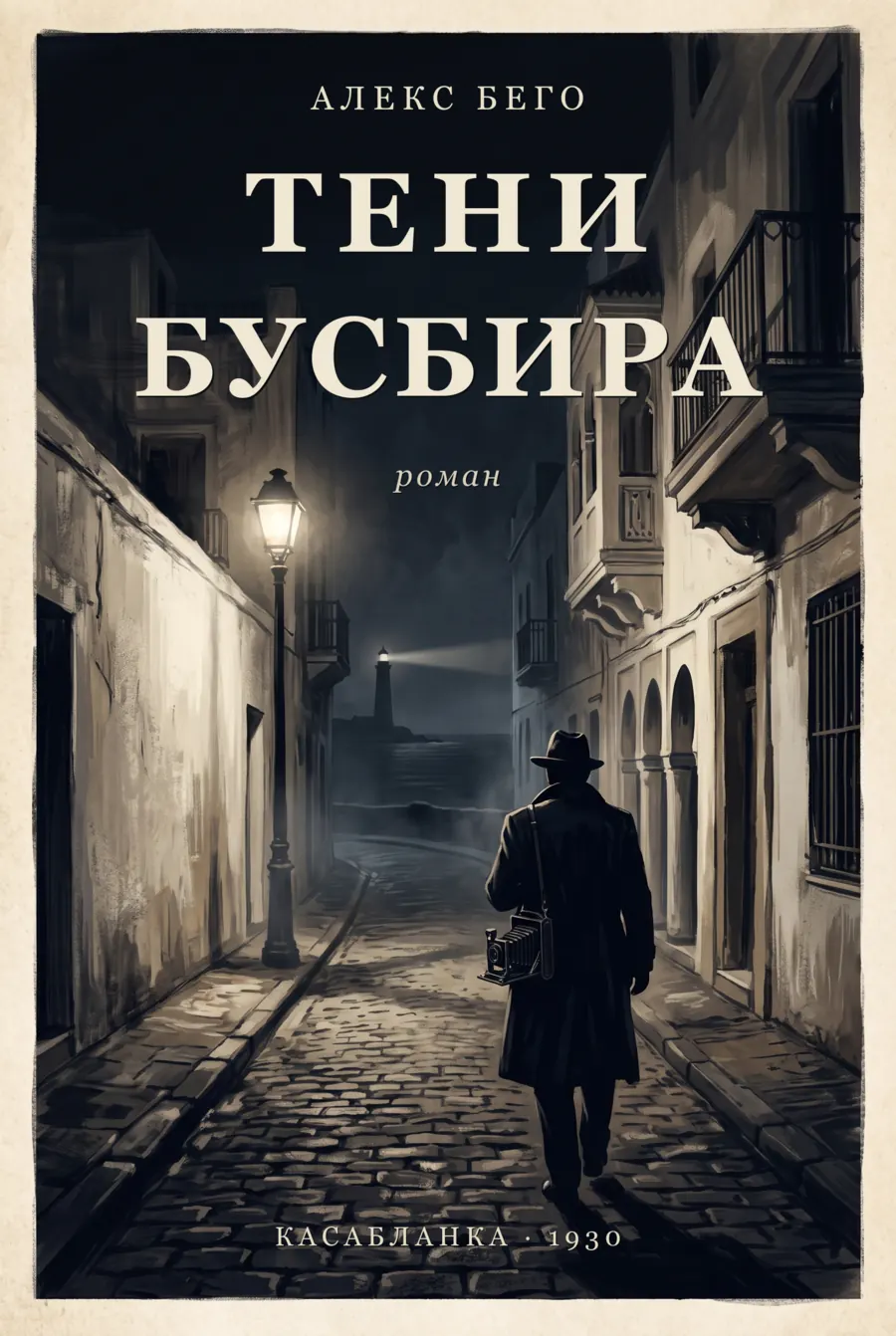
My current book is a historical noir novel set in Casablanca in 1930, at the height of the French protectorate. The working title is Teni Busbira, in English Shadows of Bousbir.
The protagonist is a real man: Marcelin Flandrin (1889-1957), the photographer whose postcards and aerial views created the official image of colonial Casablanca. History kept his pictures; the novel asks what the man behind the camera chose not to see. A veteran of the First World War who quiets his memories with work, Flandrin lives comfortably inside the colonial machine until letters begin to arrive from Fatima, a young woman locked inside Bousbir, the walled pleasure quarter that the administration itself built, policed and photographed for postcards.
Together with Liliane Duval, a young reporter for the Paris magazine Vu, Flandrin follows the letters into a Casablanca that never appears on his postcards: the quarter behind the wall, the tunnels beneath the boulevards, the beam of the El Hank lighthouse sweeping the Atlantic above it all. Women are disappearing, and every institution that should notice has a reason to look away.
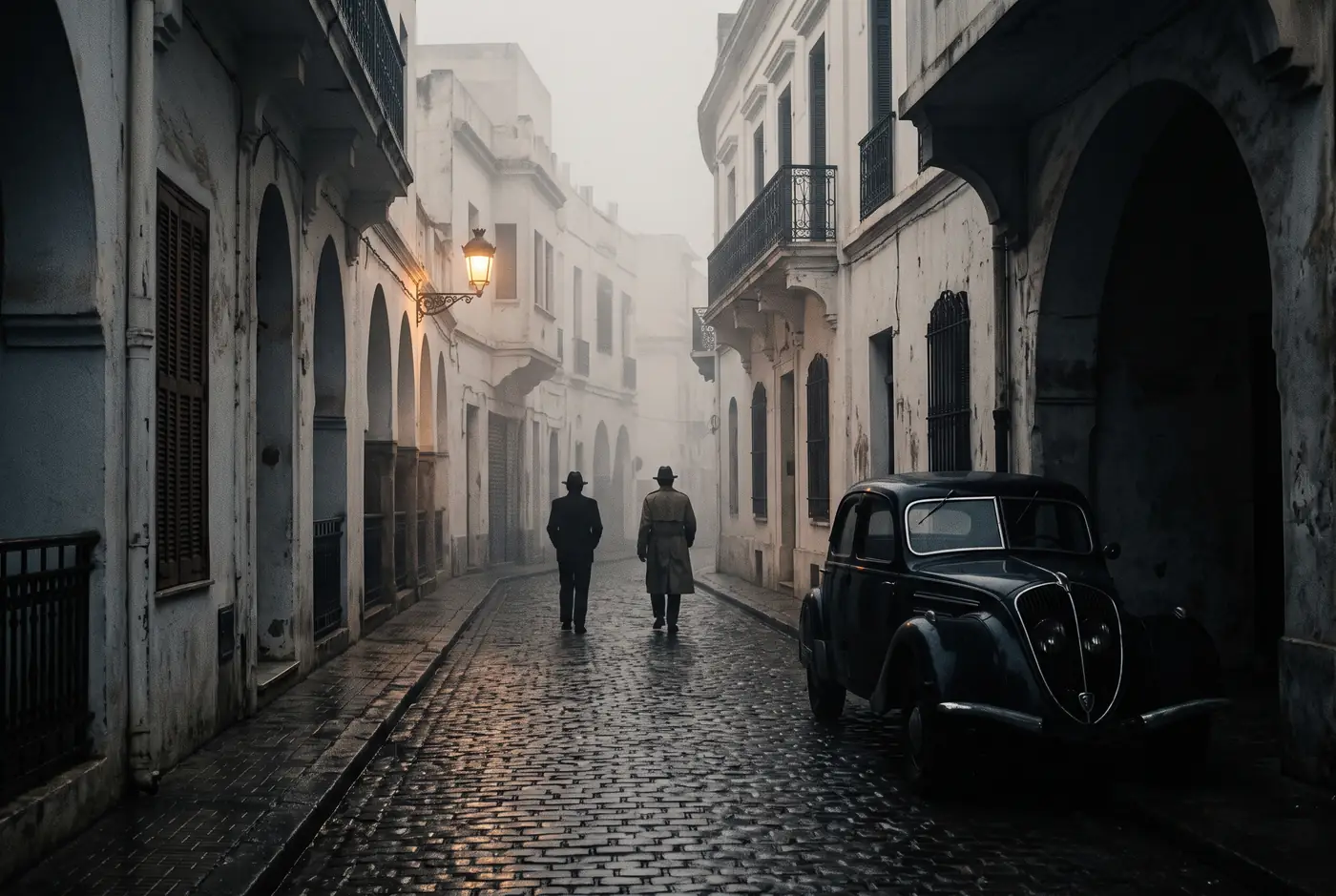
Shadows of Bousbir is a story about colonial violence as bureaucracy rather than spectacle, about photography as both witness and accomplice, and about women whose names the records were designed to erase. Its literary compass points to Patrick Modiano, Eric Ambler, Leonardo Sciascia, and to Cortazar’s photographer who found more in the frame than he wanted to see.
Status: the manuscript is complete, about 41,000 words in twelve chapters with an interlude and an epilogue, and is now in final revision. The novel is written in Russian. Publication details will be announced here and in the Journal.
Also in the works
The Assayag House: a mystical novel set in the 1932 art deco building in the heart of Casablanca where I have lived for more than a decade. A story of inherited rooms and of the things previous lives leave behind in them, closer in spirit to Edgar Allan Poe than to my noir. In development.
A Russian-language guidebook to Casablanca: the first of its kind, built on years of walks, archival work and the oral memory of the city. In preparation.
Essays and nonfiction
Alongside fiction I publish longform essays in Russian on Moroccan history and culture at cultureshock.ma, my online magazine about the country’s past and its everyday strangeness, and English pieces on photography here in the Journal.
For rights inquiries, readings or collaborations, please use the contact page.