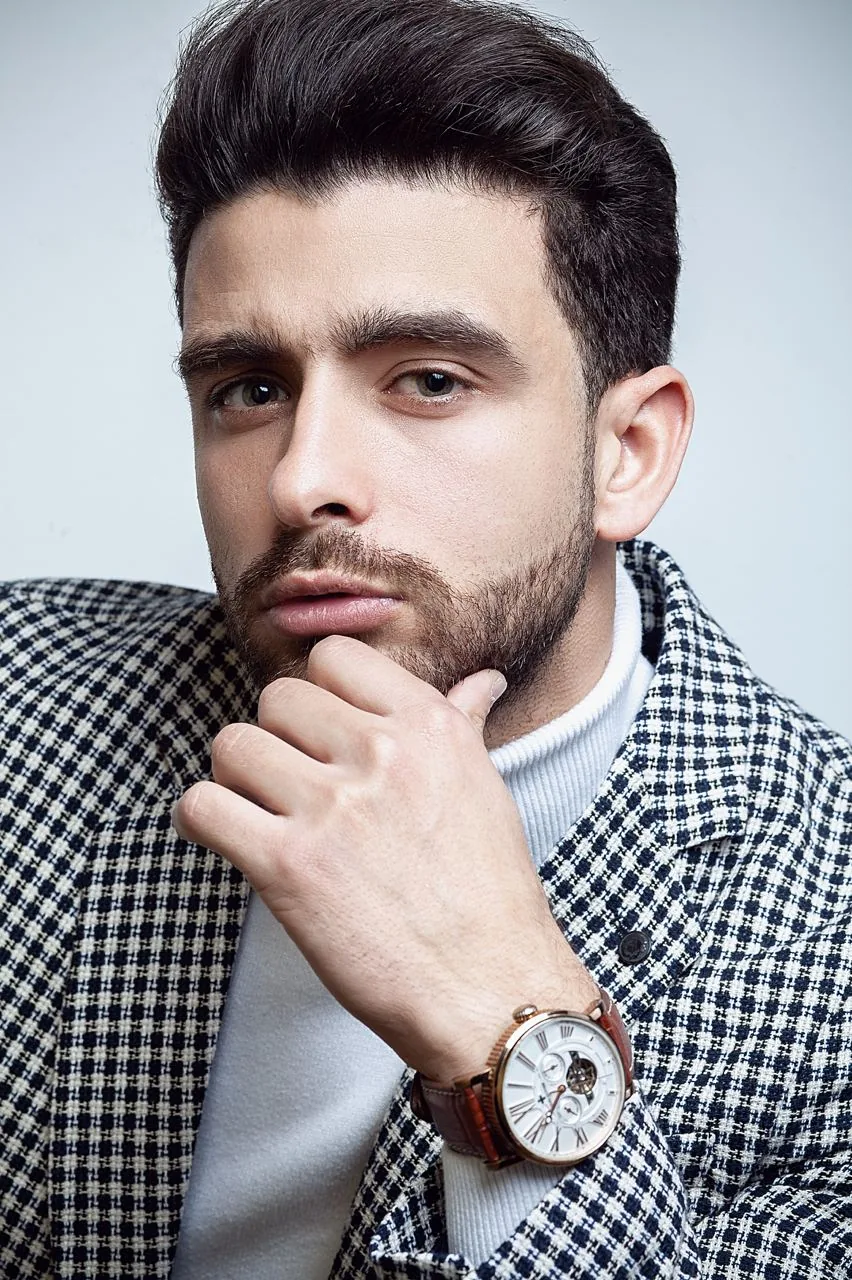
Your First Photoshoot in Casablanca: What to Bring and What to Expect

If you have never stood in front of a professional camera, you are in good company: most people haven’t, and almost everyone worries that they won’t know how to pose. You are not supposed to know. Guiding poses and expressions is my part of the work. Your part is simpler: arrive rested, with the right clothes and a clear idea of what the pictures are for. Here is everything else, from the first message to the final retouched images.
Start with what the pictures are for
The first question I ask is not about clothes or locations. It is about use. A portrait for a company website, a press kit, a model portfolio and a social media profile are four different photographs, even if the same person sits in front of the lens.
- A website usually needs horizontal frames with calm space on one side, where a headline or a menu will sit.
- A profile picture has to read at the size of a thumbnail, so the framing is tight and the background quiet.
- The press asks for a clean vertical and a horizontal version of the same look, because editors crop to their own layouts.
- A model portfolio needs range: a close headshot, a full-length frame and several looks that show what you can do.
Tell me where the images will live, and I will build the concept, the light and the shot list around it before the day of the shoot. That way the time on set is spent on pictures, not on logistics.
Studio or location
The studio is the safest choice for a first session. The light is fully controlled, the weather does not matter, and the background can go from pure white to deep black in a few minutes. Headshots, corporate portraits and clean editorial looks are made there.
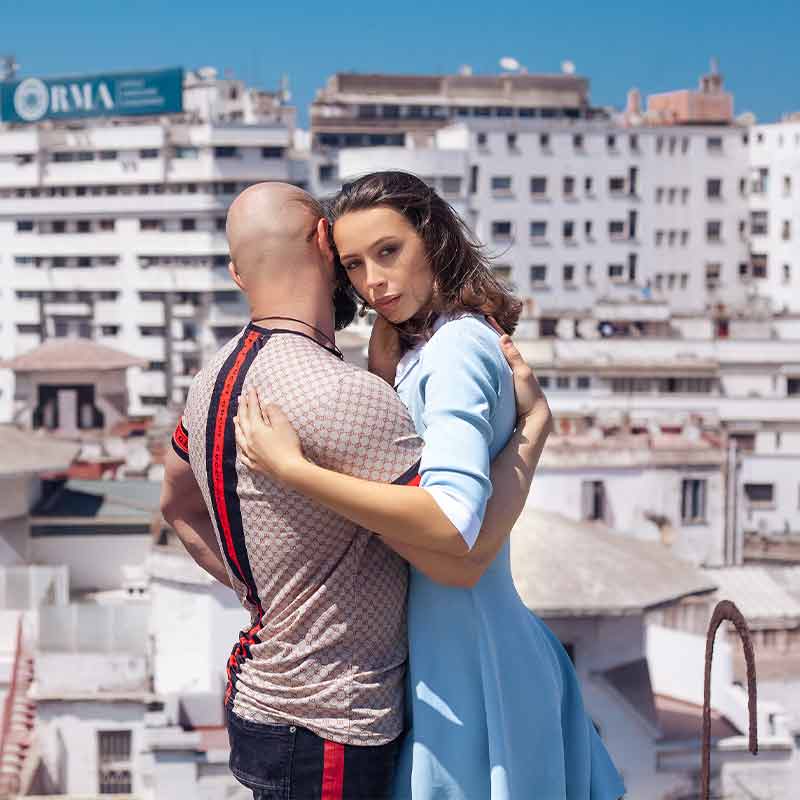
Location brings something the studio cannot: a sense of place. Casablanca is generous here, with white facades, art deco streets, rooftops above the city, palms and the ocean corniche. Your office, your workshop or your home can tell even more about you than any backdrop.
The one thing to respect outdoors is the sun. At midday the Moroccan light is hard and vertical: it digs shadows under the eyes and makes everyone squint. Outdoor sessions are planned for the early morning or the late afternoon, when the light is lower, softer and kinder to skin. If your schedule only allows the middle of the day, we look for open shade, a covered terrace or a north-facing wall.

What to wear and what to bring
Bring more than you think you need. Two or three outfits give us room to change the mood, and the second look is often the one people choose in the end. A few simple rules save a lot of time:
- Fit matters more than price. Clothes that fit well and are ironed look expensive on camera. Bring them on hangers, not folded in a bag.
- Solid colours and good textures photograph more reliably than large logos and slogans. A strong pattern can work, but bring a calm alternative.
- Think about the whole frame. If full-length shots are planned, your shoes are in the picture too.
- Accessories that are yours: the watch you always wear, your glasses, a ring. Glasses are not a problem; anti-reflective lenses make them easier.
- Objects of your trade make a portrait specific: an instrument, a camera, a tool, a book you wrote.
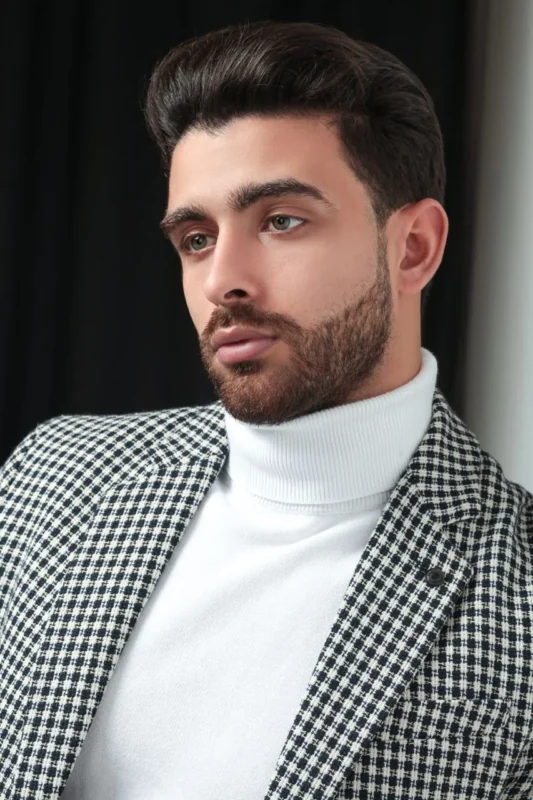
For grooming, the rule is no experiments the day before. Have your haircut a few days ahead so it has time to settle, decide in advance whether you want the beard or a clean shave, and avoid new skincare products or treatments right before the session. If your shoot includes a makeup artist, come with a clean face. If not, keep makeup matte and close to what you wear every day.
Finally, the small things: water, a snack for longer sessions, lip balm and a comb. They take no space and save more than one frame.
What happens on set
The first minutes are a warm-up, for both of us. I adjust the light to your face and you get used to the sound of the shutter. It usually takes only a few minutes before people stop thinking about the camera, and that is when the good pictures start.
From then on, I guide every pose and expression. You will hear small, precise directions: weight on the back foot, chin slightly forward and down, hands doing something instead of hanging. None of it needs preparation. We change outfits and light between looks, take breaks when needed and give each look the time it requires. A good photograph is not taken, it is built.
Light sets the mood
The same person can look open and approachable, or serious and dramatic, depending on the light alone. Before the shoot we choose the mood that fits the use of the pictures. Three common directions:
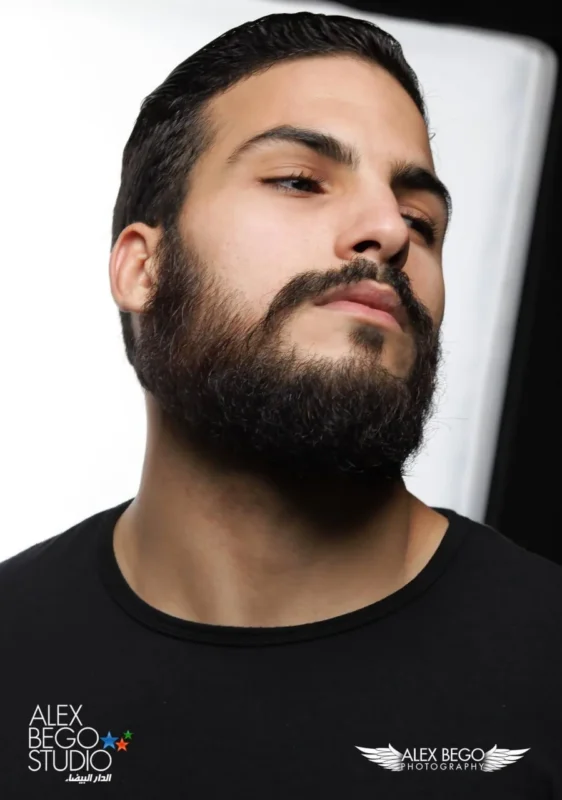
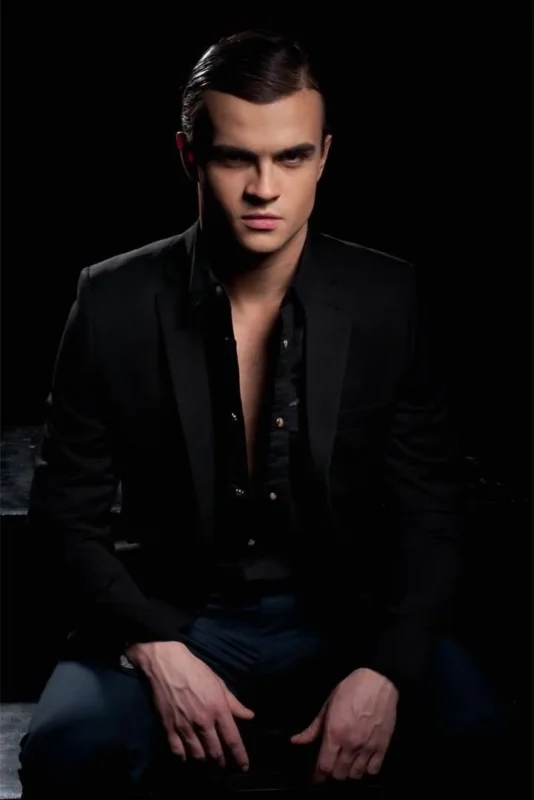
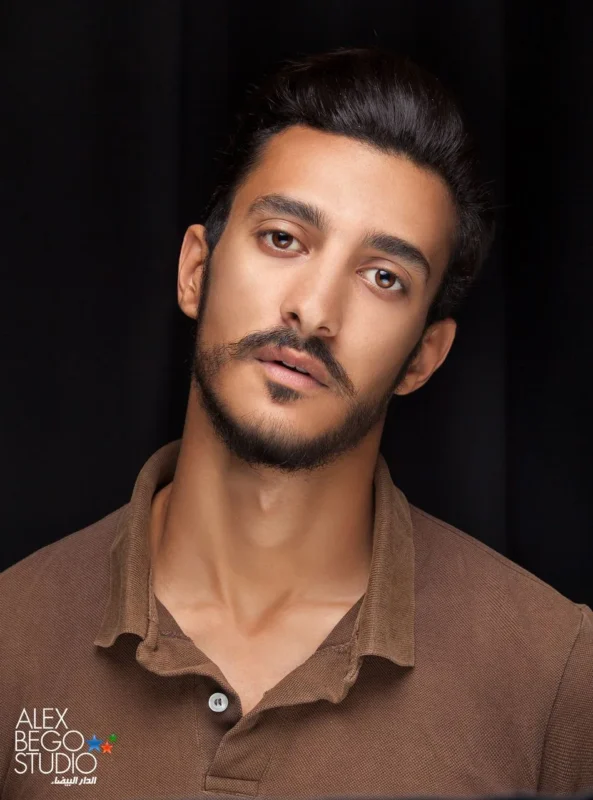
None of these is better than the others. A lawyer’s website, an actor’s casting portfolio and an album cover each have their own answer, and part of the brief is finding yours.
After the shoot
The number of final images is agreed before the shoot, so the quote holds no surprises. After the session I make a first selection, and you receive a curated set of professionally retouched images, ready for print and for the web.
Good retouching is quiet. It cleans the frame, balances light and colour and removes what is temporary, like a blemish or a stray hair. It does not change who you are. The aim is a photograph of you on a very good day, not of a different person.
Ready to book your first session
Send me a few lines: what the pictures are for, where they will be used and which dates suit you. I will reply with a direction and a quote. You can see the full range of work on the Photo Shooting page and in the portfolio, or write to me directly through the contact page. Teams who need consistent headshots will find the details on Corporate Photography.
Visiting Casablanca rather than living here? A portrait session can be combined with a photo walk through the city: you discover the art deco centre with your own camera, and leave with a few portraits of yourself in it.